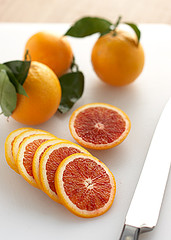
May 26, 2010
Off We Go
16 comments     Categories: Cook and Eat, Food, Garden, Lunch, Recipe, Salad, Savory

In just a few hours, I’m going to be hopping on a plane to another season. There will be butt-numbing numbers of hours watching personal video, reading and listening to music. And then, I’m going to find myself in South Africa.

Yes, South Africa. Where, if weatherbug has it correctly, the weather will be surprisingly like it has been in Seattle. Imagine that.

We are going because my husband, who is very brave and maybe a little insane, will be running this marathon. Which really isn’t a marathon at all. It starts that way, but then it keeps on going. For a total of 55 miles. Did I mention a little insane? And very, very brave?

Afterwards, and after a couple of days of recovery, we’ll be heading out on safari before heading back home.

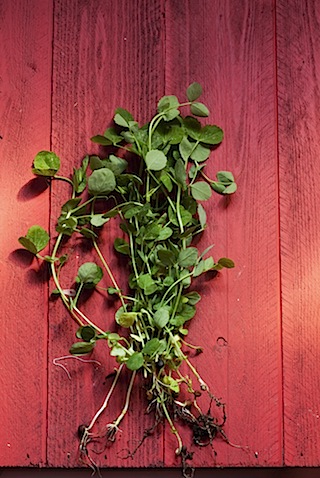
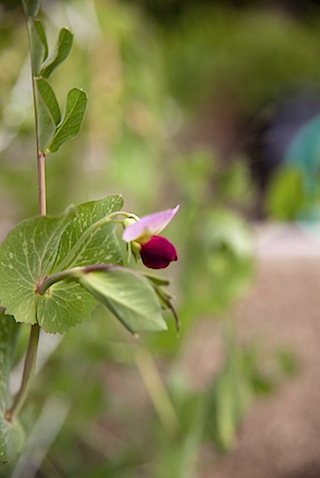
I can’t wait to share some of the stories with you. I also can’t wait to see what will be happening in the garden when I return. It is already so full of promise. My pea plants seem to grow in inches overnight, and have just started to put out scarlet blooms. Lemony sorrel, which was planted last fall, is in full force. Chives have blossomed into beautiful lilac balls. And I have just harvested my first leeks!

springgarden08.jpgspringgarden11.jpg

springgarden10.jpg

springgarden12.jpgspringgarden16.jpg

There is nothing like a leek pulled straight out of your own garden.

With these, I made little julienned strips, tossed them in olive oil, and roasted them in a hot oven for about 15 minutes. They caramelized up quickly into little crisps which taste remarkably like toasted marshmallows.

autoimport-3413.jpgautoimport-3416.jpg

You can use them to top soups, pizzas or as I did on top of a simple salad of sorrel, sauted trumpet mushrooms and an egg. Delicious.

autoimport-3426.jpgautoimport-3431.jpg

Have a great couple of weeks! See you in June!

April 19, 2010
Spring on a Plate
10 comments     Categories: Food, Lunch, Recipe, Salad, Side

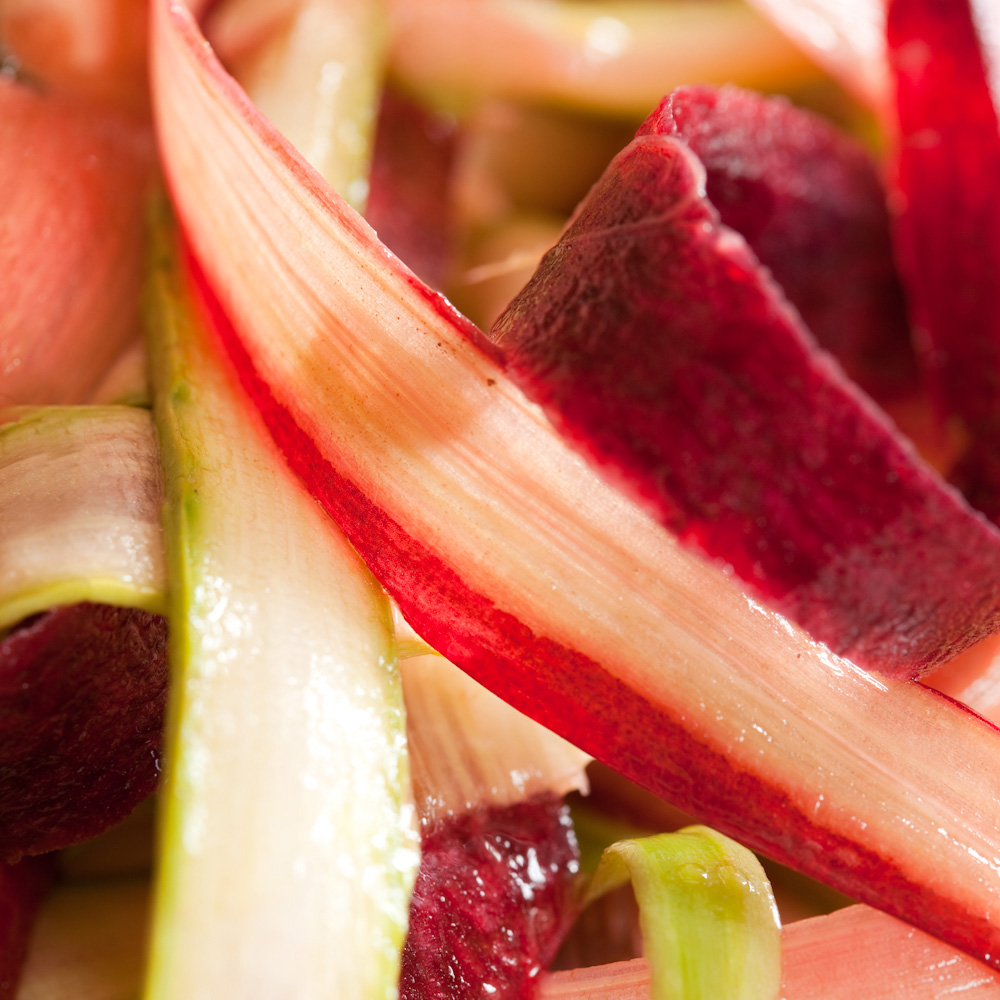
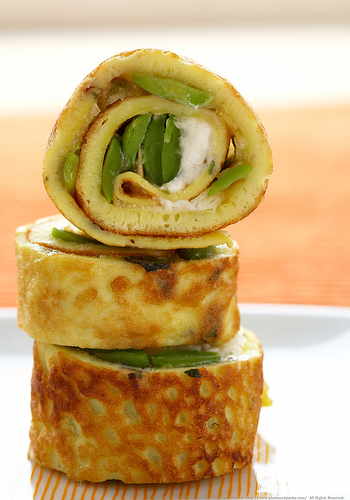
Swirl ribbons of fresh, fat spears of asparagus, an unusually colored carrot and lightly pickled rhubarb together with a touch of minced shallot, a pinch of thyme leaves, a sprinkle of sea salt and a splash of fruity olive oil and sherry vinegar. Add a bit of fresh from the farmers’ market soft chevre, if you like. And there you have it. Spring on a plate. Nothing else really needs to be said, does it?

January 14, 2010
The Italian Farmer's Table
8 comments     Categories: Cookbooks, Lunch, Recipe, Salad

The summer we went to Italy, Cam & I came home with dreams of packing up and finding some little Italian cottage to call home. I’d meet local food artisans and do what I do… write and photograph about the food and culture. I’d write a cookbook on traditional Italian cookery that went much deeper into regional dishes than most Italian cookbooks do. Of course, that’s far easier to dream about than actually do, so here I still sit in Seattle, longingly flipping through The Italian Farmer’s Table cookbook, written by a a pair of chefs who turned their dream into a book of real Italian cooking.

Yes, I am quite envious of Matthew Scialabba & Melissa Pellegrino who got to live one of my dreams. For 4 months, they traveled around Italy’s agriturismi, harvesting grapes, making goat cheese, hunting for local venison. I’m also thankful that they shared so much they experienced in their cookbook; not just recipes, but stories of the families they met along the way. They sent me a copy of their book several months ago, and it’s taken me a while to sit down with it and take it in. I still have much I want to cook from it, but today, I finally picked out a recipe to try, a simple salad of cabbage, pear and orange.

This recipe is definitely not what you’d think of if you think of Italian cooking, and that’s one of the reasons that I picked it. I appreciate the fact that this is not simply a cookbook of those recipes that everyone thinks of when they think of Italian food, but gets deeper in to what people really eat. This particular recipe is from the chapter on Casale Cjanor, an agriturismo/poultry farm in the San Danielle region of Friuli. Recipes in this region are heavily influenced by Germanic and Slavic roots, and you’ll find all sorts of ingredients that wouldn’t come to mind when thinking about Italian food.

autoimport-1639.jpgautoimport-1619.jpg

autoimport-1625.jpgautoimport-1629-2.jpg

This particular recipe is a bright salad that would be a perfect accompaniment to any heavy stew (like perhaps, the hearty looking braised duck just a few pages past). The celery, cabbage, pear and oranges are remind me of a Waldorf salad, but without the goopy mayo. It’s really the perfect side salad to have in winter, when citrus is at it’s peak.

I’m very much looking forward to trying many of the other recipes in this book!

Cabbage and Pear Salad (Insalata di Cavolo e Pere)
From The Italian Farmer’s Table   

The original recipe calls for green cabbage, but I had red cabbage on hand and I love the vibrancy it adds. Feel free to use either red or green. I think this salad would also work well with a handful of toasted walnuts tossed in.

Serves 6

1 or 2 large orange
2 tablespoons extra virgin olive oil
1 teaspoon white wine vinegar
1/2 head cabbage (red or green)
1 pear, cored and thinly sliced
2 stalks celery, sliced into half moons
1 tablespoon poppyseeds

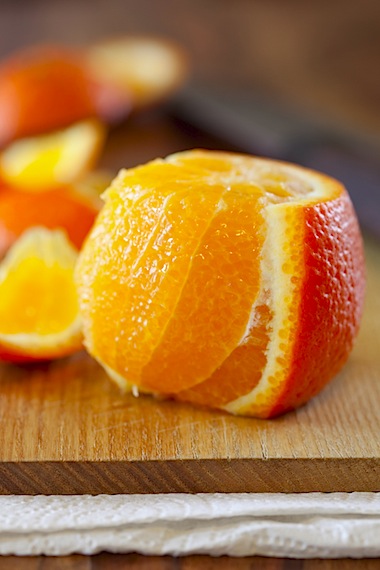
Start by peeling the orange. I like to do this with a knife even if the oranges peel easily, to remove all the pith and white membrane. Once peeled, section the orange in small segments, and catch the juices that spill as you go. You want to have between 1 and 2 tablespoons of juice, so if needed, squeeze a bit more. I like the dressing quite citrusy.

Whisk together the orange juice, olive oil, vinegar and a bit of kosher salt & pepper, and set aside.

Shred the cabbage and place it in a medium bowl. Then, add the pear, celery and poppyseeds. Add a pinch of salt and pepper, followed by the dressing. Toss to coat.

To serve, place a mound of the cabbage and pear mixture on the plate, and top with two to three orange segments.

December 16, 2009
Family Recipes
9 comments     Categories: Family Recipes, Recipe, Salad, Savory

Cole is taking Food Science this semester, and one of her projects was to create a small book of family recipes. She’s probably the only one in her class that has a parent that is a food photographer, as well as a family cookbook that is already online. Lucky kid! And, lucky me, because we got to spend quite a bit of time cooking together, something that she hasn’t been that interested in before. While Cole has always had a great appreciation of good food, it’s always been more about eating it than making it herself.

Her passions lie elsewhere, in her music. You’ll have to excuse a little proud mama moment, but Cole had an opportunity a few months ago to record two of the (many) songs she has written over the past year at Robert Lang Studios. This all came about because her vocal coach, Andrew Vait, was able to get her studio time & some studio musicians to sit in with her. What an amazing experience it was to watch her in the studio (the same studio that Death Cab for Cutie was recording in the night before). This week, we got the tracks back from the studio. Cole has posted them to her MySpace Music page, along with some of her other home-recorded work. She’d love it if you took a listen!

PdlSWorkshopatSpringHill-1.jpgPdlSWorkshopatSpringHill-2.jpg

Anyway, back to the food. We made a delicious lentils salad (recipe below) which couldn’t be simpler, along with my family’s marinara sauce, Italian bread, chicken cacciatore, Nancy’s pasta, “Carli” cake and butter tarts. Simple and delicious food that was so fun to share with her.

autoimport-1035.jpgautoimport-1040.jpg

autoimport-1044.jpgautoimport-1070.jpg

autoimport-1097.jpgautoimport-1042.jpg

autoimport-1052.jpgautoimport-1089.jpg

PS: Menu for Hope is going on! I’ve be posted about my offering on Still Life With & The Doughnut Cookbook blogs! There are so many great prizes this year… make sure you check it out!

Quick Lentil Salad

Boil lentils (I like to use the small French lentils) in salted water (about a 1:4 ratio of lentils to water) for about 20 minutes or until they are just tender. You may need to keep adding water so the pot doesn’t go dry.

While those are cooking, make a fine dice of carrot, green pepper, celery and shallot. Fresh herbs if you have any.

Make a quick viniagrette of olive oil and red wine vinegar (or champagne vinegar), 2:1 ratio, with a little salt and pepper and maybe a pinch of dijon mustard if you’d like. Mix well.

Drain the lentils, and rinse in cool water briefly. Drain again. Dump in the veggies and dressing, and then add a bit more salt and pepper to taste.

March 21, 2008
Sustainable Yellowtail: A Beautiful Thing
Add your comment     Categories: Cookbooks, Dinners, Food, Lunch, Recipe, Salad, Savory

One of the best parts of my job is that I tend to get a lot of free food. Even food that I winds up on the set is still edible when I’m done. Oh, I wouldn’t go feeding it to guests or anything… afterall, it is usually cold and always has been poked and prodded by my fingers. But, it’s also made from the highest quality of ingredients I can find, and is (almost) always, delicious.

Most of the time, this free food is simply left over from a shoot that I’m doing. Sometimes, it’s sent to me by companies that are looking for feedback, really excited about sharing their product with someone who thinks a lot about food, or someone who is simply looking for extra press. I certainly understand that there are some bloggers out there who prefer not to accept free stuff… but I’m not one of them. When I get free stuff, I never promise to write about it on this blog. It takes something pretty special, in fact, to make it on here. And, sometimes, I still don’t even get around to it. But, sometimes, like today, I do.

Today, I want to share with you a fish that I am really excited about. When I got mail from Hannah asking if I’d be interested in trying some Kona Kampachi from Kona Blue, I was intrigued. I’m a huge fan of sushi, and will always have a hard time turning away from sashimi-grade yellowtail. But, what really struck me is that Kona Blue is a company trying new methods of fish farming that attempt to solve some of the problems of related to traditional “aquaculture.” In-shore fish farm can create serious pollution problems, releasing waste and excess nutrients into water at rates that can’t be cleaned up by natural processes. Those farmed fish also tend to suffer from mercury poisoning. Kona Blue is fishing in large sea-cages sunk into deep water far off shore, so the fish can basically school as they would in the wild and the pollution problems can be avoided. And, at the same time, the natural fish population is not being depleted. The fish also boast a 30 percent fat content, high levels of omega-3 fatty acids, and no detectable mercury.

I think it’s really early to tell whether these new fish farming practices are a good thing or if they introduce problems of their own. But, I applaud companies for trying to solve some of these problems in a responsible way. Plus, I can tell you this, the fish is beautiful.

Konakomapchi-9Konakomapchi-10

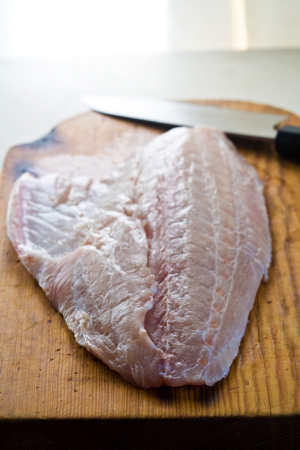
My package arrived well packed in ice, but not frozen, so the two, large fillets were immediately ready to use. The fillets are thick and fatty… perfect for a nice lunch of sashimi, with a ton still left over.

Konakomapchi-2Konakomapchi-4
Konakomapchi-7Konakomapchi-5

In fact I’ve been playing with a variety of preparations… the fish is so fresh, it’s almost a crime to cook it… but in addition to a sashimi miso salad, some simple nigiri sushi, I also lightly seared a good chunk and served it with a butternut squash mash and a fresh lemon dressing. Yum. I still have a whole fillet left that will have to be put to use quite soon. In the meantime, I thought I’d share a few shots and recipes with you.

If you want to try to find some of this fish on your own, you can order it from their website… but shipping is quite expensive. If you are in Seattle, Uwajimaya sometimes has it in stock and several area restaurants, like Canlis and Oceanaire have it on their menu. Or you can check out Kona Blue’s extensive “where to find” list.

PS: Thanks to Matt for correcting my initial mis-statement that Yellowtail is Tuna. In fact, it is its very own fish. All these years of ordering hamachi, and I always thought I was eating tuna!!!

Konakomapchi-6

Seared Yellowtail in Lemon Dressing
From Arabesque by Claudia Roden

I went searching through about 15 different cookbooks to find this super simple seared tuna recipe. Most of the other recipes I found piled on enough seasonings that the flavor of the fish would be lost. This yellowtail was far to lovely to cover up. What loved about the Arabesque recipe was how delicate the dressing is… it brightens and enriches the flavors already in the fish. I substituted hazelnut oil in the dressing, which I thought brought even a new dimension to the flavor. The original recipe also recommended pairing the seared fish with mashed potatoes, but I had some left over roasted butternut squash that I smashed up with a little OJ and a little cream which went beautifully with the citrus sauce on the fish. A little mache salad on the side brings a little more springtime to the plate.

1 lemon
2 T hazelnut oil
salt & pepper
1 thinly chopped green onion (or fresh chives)
2 T olive oil
1 thick-cut fillet of sashimi grade yellowtail (or tuna)

Zest and juice the lemon into a small bowl. Add the hazelnut oil, green onion and freshly cracked pepper. Set aside.

Heat the olive oil in a pan on high heat. Just before the smoking point, add the fish. Sear for only 1 minute on each side. Remove from heat. Slice into thin slices and sprinkle with sea salt flakes. Pour the dressing over the top to serve.

Konakomapchi-1

Yellowtail Sashimi in Miso Dressing
From Harumi’s Japanese Home Cooking

Here’s another lovely recipe from Harumi’s Japanese Home Cooking. This is so simple, but does require the best fish you can find, with a good amount of fat on it. The fat helps give a wonderful silky mouthfeel, not to mention a richer taste. You’ll need a few ingredients that you’ll probably have to go to an Asian market to get. Red miso paste and mirin can be hard to find in some supermarkets.

1/3 lb sashimi-quality yellowtail (or tuna)
3 T red miso paste
1 1/2 T casters (super-fine) sugar
1/2 T mirin
1 t rice vinegar
1/8 t dry mustard
1 1/2 c chopped green onion or chives
1 T finely grated ginger

Mix together the miso, suar, mirin, vinegar and mustard, until smooth and the sugar has dissolved.

Cut the fish into little cubes, about 1/2 to 1 inch each, and place in a medium sized bowl. Start adding the dressing a little at a time, stirring gently, until each piece is nicely coated. You may not need to use all the dressing… and I think it is best not to add too much dressing or you won’t taste the fish.

To serve, place in individual bowls, and top each with the green onion and a little dollop of freshly grated ginger.